From Revenge to Protection: A Journey of Empathy in Homs, Syria
09 February 2026
It was the evening of Saturday, December 7, 2024. The city of Homs was tense, witnessing a major shift in control. Ismail, a 26-year-old farmer, gripped his weapon and started his motorcycle. Behind him sat his cousin, also armed. They had made a pact: to ride to the nearest checkpoint, confront the soldiers there, and inflict harm. They were driven by anger and the chaos of the moment.
As they sped through the streets of the IDP neighborhood where they lived, the intention was clear. But somewhere between their home and the checkpoint, the journey took another turn.
The Power of Accompaniment
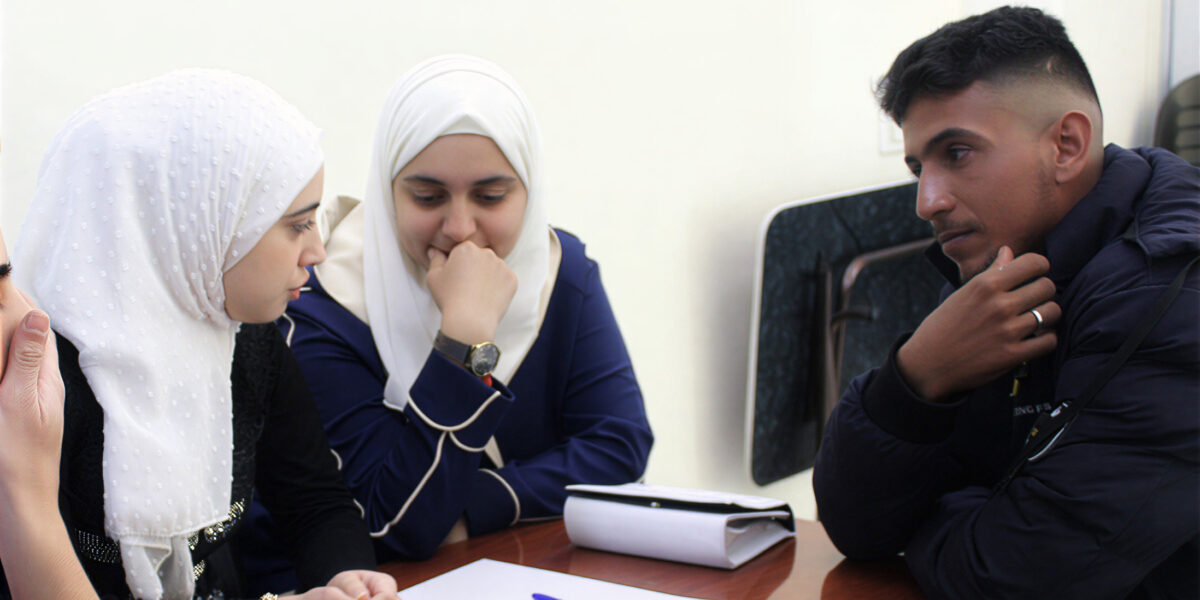
To understand what happened next, one must understand who Ismail is. He was not a typical community leader. He was a farmer with limited formal education, living in an environment marked by violence and economic hardship. Yet, he had been selected for the Youth in Empowerment program implemented by JRS (Jesuit Refugee Service) at the Bab Sebaa Center.
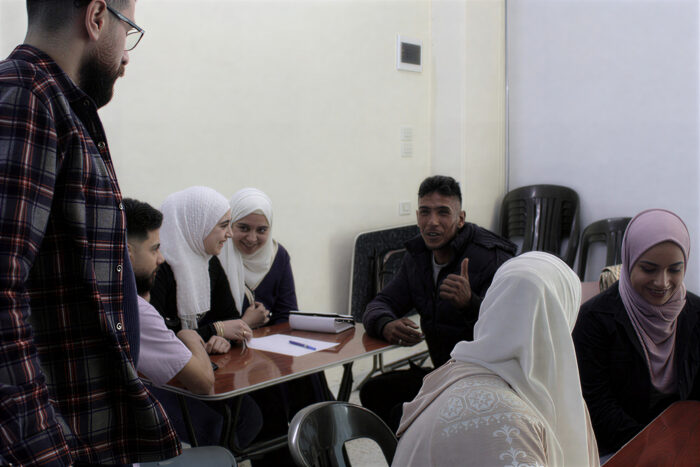
The selection criteria prioritized university students, but Osama Skeif, the group supervisor and PSS worker, saw something exceptional in Ismail. “We saw maturity in his dialogue and ideas far beyond his educational level,” Osama recalls. “His interest in the team showed us a leader’s personality.” Accepted as an exception, Ismail participated actively from October 18, 2024, to May 2, 2025. The last session before the city’s shift was about “Confronting Fears and Experiencing Loss.”
The Turning Point
On that evening ride, Ismail saw abandoned military uniforms and weapons scattered on the road. Instead of fueling his anger, the sight triggered a memory from the JRS session. He paused. He imagined the grief that the families of those soldiers would feel if he proceeded. He realized that the fear he saw in the abandoned gear was the same fear he felt for his own brother, who was serving mandatory military service in Damascus.
The weapon remained in his hand, but the intention changed.
Empathy in Action
Ismail and his cousin continued to the checkpoint. But their intention had changed. Instead of harming the soldiers, they approached them to offer protection. They made a joint decision to safeguard them. They took four soldiers into Ismail’s home, fed them, and arranged safe transport for them to return to their hometowns. “I was afraid for my brother,” Ismail says. “I was sure that there are good people who will help and protect him, just as I am doing now.”
From Pain to Responsibility
Ismail’s action was not just about saving four individuals; it was about breaking the cycle of violence in his community. Today, Ismail serves as an officer in the Internal Security Forces of the new administration. His journey reflects a transformation from impulse to responsibility.
Reflecting on this, Osama Skeif notes: “In moments of major transformation, we do not plant new ideas in youth as much as we reconnect them with their own humanity. When a young person remembers their tools for managing anger and facing loss, they become capable of choosing protection over harm, and rescue over revenge. This is the essence of accompaniment: turning pain into awareness, and impulse into responsibility.”
Ismail’s story stands as a testament to the power of social cohesion. He chose to protect life, inspired by the hope that others would do the same for his own brother.
Note: Names have been changed to protect the dignity and privacy of the individuals involved.
Explore more