One Explosion, Years of Healing: Khadija’s Crossing from Rubble to Rebuilding
12 January 2026
It took only a moment for the shell to pierce the wall of the school that sheltered them during displacement, but its echo has lasted for years. In that fateful instant, not only did the concrete wall collapse, but the life of Khadija* (38) and her family was forever altered. Her son Basel was struck by shrapnel that ruptured his intestines, requiring emergency surgery. Her daughter Shatha suffered severe hearing loss in both ears, and Khadija’s own eardrum was torn.
That brief moment stretched into years of hardship. The explosion was not the end of their journey, but a tragic milestone along a painful path of repeated displacement. They found no lasting safety—from al-Waer to Zoghra Camp, then to Idlib, Jarabulus, and finally back to Homs in 2025.
The Weight of Survival
Amid the rubble, and after returning to Homs, Khadija’s husband left the family and remarried someone she knew. The betrayal cut deeply, shattering her trust in others completely. Left alone to raise four children, she now lives with them in a single room within a shared house housing 16 relatives and in-laws. The space is borrowed from her brother-in-law, who has threatened to evict them at any moment. She does not even have a private space to change her clothes.
Her children’s realities reflect the family’s struggles: Basel (19) suffers from a health condition resulting from his injury, requiring constant monitoring. Muhannad (18) works as a daily laborer to help support the family. Shatha (16) has been unable to attend school and requires neurological follow-up. The youngest, Ali (10), is in first grade.
Overwhelmed by poverty, grief, and isolation, Khadija’s coping mechanisms frayed. “I was broken and powerless,” she recalls. “I used to hit and yell at my children. I was carrying so much pressure and anger that I couldn’t control.”
Breaking the Wall of Silence
When Khadija first arrived at the Fr. Frans Van der Lugt Centre (CBSC) in Bab Sbaa, run by the JRS, she brought only silence. Words felt inadequate for the weight she carried. In early sessions, she repeated just one phrase: “I have a heavy burden.”
Ossama Saqif, the JRS PSS worker, remembers her early days: “At first, she was withdrawn and wouldn’t engage. I gave her the space and time she needed, never pushing, just waiting.”
The turning point came during a session on “Psychological Trauma.” In that safe space, Khadija finally let go of her silence. For the first time, she spoke openly about the war, her injuries, the repeated displacements, and her profound losses: her mother-in-law, whom she loved like her own mother; a brother-in-law who had always cared for them; and the day at the school that changed everything.
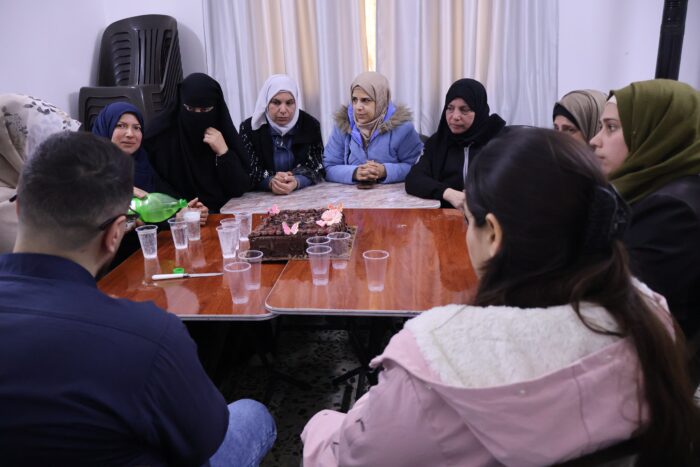
“These were stories she had never been able to share with anyone,” Ossama notes. “But here at the center, she finally found a safe space. After that session, she began to open up, participate, and truly engage.”
From Reaction to Responsibility
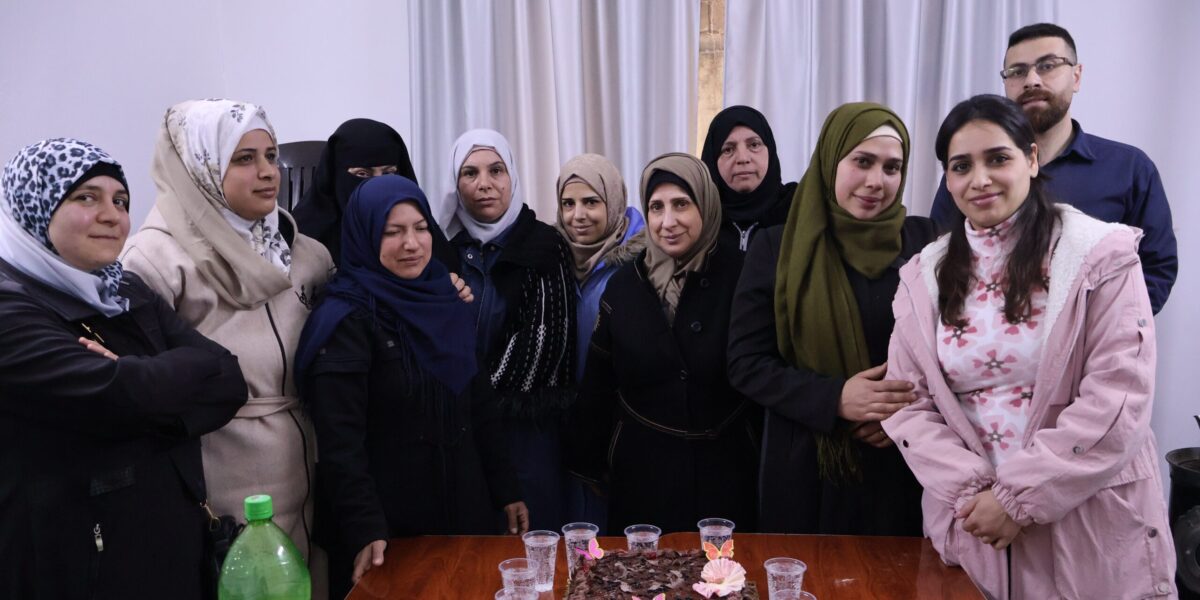
Khadija enrolled in the JRS “Parents Under Pressure” Program, running from January 8 to March 30, 2026. It became more than a series of workshops—it was a process of rebuilding herself. She learned how to manage her emotions, care for her physical and mental well-being, and practice positive, non-violent parenting.
“I finally understood the difference between right and wrong,” Khadija says. “I used to be harsh with my children. Now, I’ve learned to guide and accompany them. I’m more organized, more active, and even started a small stall to earn a living for my family.”
The transformation did not go unnoticed. Basel shares: “You’ve changed with us. You’re more considerate now, you take care of my health needs, and you even prepare special water for me.” Muhannad adds: “You used to get angry and hit me, but now you talk to me instead. The most important thing is that you stopped hitting us. We’re grown now, and you guide us.”
Ripple Effects Beyond Herself
Khadija’s healing did not stop at her own home. She became a bridge for others in her community. When a mother refused to let her daughter attend the center, Khadija personally visited the family, explained the program’s benefits, and committed to personally accompanying the daughter to and from the center until the mother felt comfortable.
Even Khadija’s aunt noticed the profound shift: “Her behaviour with her children changed completely. She told me, ‘No one should stop learning. I attended classes, and it’s nothing to be ashamed of. It actually helped me change for the better.'”
Khadija concludes with gratitude: “Thank you so much for your kindness, your warm welcome, and what you’ve taught me. I will tell everyone about this center so they can benefit too.”
From a moment of devastation to a seat in a supportive learning circle, Khadija’s story proves that while wounds may bleed for years, healing begins with a single step, a safe space, and hope rebuilt day by day.
*Names have been changed to protect the dignity and privacy of those involved.
Explore more