Ruba’s Story: From Anger to Words- Education in Homs
25 May 2026
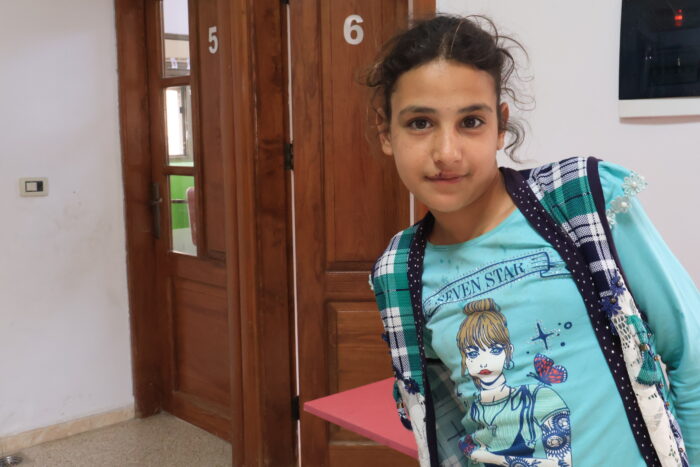
Ruba’s behaviour at the JRS centre in Bab Sbaa, Syria, was not easy to understand at first. She would greet others while shouting, ask for things with anger, use harsh words, and seemed always on guard.
But how could an 11-year-old girl, carrying so much loss, fear, and poverty, learn calm on her own?
During her first individual session, Ruba looked at the PSS worker with fear and asked: “Why am I here? And why do you want to talk to me?”
She thought she had done something wrong. She was not expecting someone to call her simply to ask how she was.
The PSS worker reassured her: “I just wanted to check that you are okay and ask how you are feeling.”
A smile appeared on Ruba’s face. In that small moment, something began to change.
A childhood shaped by loss and child labour
Ruba is 11 years old. She should be in Grade 5, but difficult family and economic conditions forced her to leave school before acquiring basic reading and writing skills.
She lives with her grandmother and four siblings in a damaged and unhealthy shelter provided by people from the community. Her grandmother, a widow with weak eyesight, is raising the children in the absence of their parents. Ruba’s father died after many years of detention, while her mother left Ruba and her siblings after remarrying.
The family had also experienced deep violence and loss. Ruba’s grandfather and two of his sons were killed in violent circumstances, and stories of violence are often present in the home where she is growing up.
Amid all this, Ruba started working at the age of nine in a concrete block workshop. At an age when she should have been in school, learning and playing in a safe place, she was already carrying responsibilities far beyond her years.
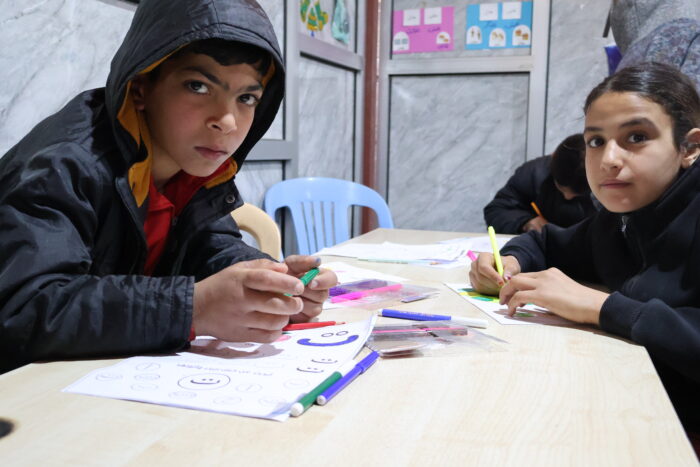
A safe space begins with listening
Ruba joined the Jesuit Refugee Service centre in Bab Sbaa through Level 1 child protection activities. This is her second year at the centre.
Her enrolment came from a clear need for a safe and child-friendly space, especially as she was working outside the home and lacked a stable place where she could feel protected, supported, and heard.
At the centre, Ruba received educational follow-up and participated in individual and group psychosocial support sessions. The PSS worker who followed her case explains:
“The sessions focused on communication, acceptance, and helping Ruba replace negative thoughts with more realistic ones. We also worked with her to recognise her strengths, including her ability to help others, her intelligence, and her capacity to grow in learning and communication.”
The family also benefited from external referrals to centres providing financial assistance and clothing support.
Ruba describes the centre in her own simple words:
“You are very kind.”
And when she speaks about the team, she says:
“The brothers and sisters are the best. They are respectful and they listen to us.”
For Ruba, the centre became a place where she felt treated with respect, and where her voice could be heard without fear.
From anger to words
When Ruba first came to the centre, she often complained, asked for things insistently, refused help at times, and struggled to connect with other children. She used harsh language, did not greet others, and would shout from a distance instead of approaching and speaking.
After repeated concerns about her behaviour, she was referred for individual follow-up by the case manager. But change did not begin with blame. It began with trying to understand her.
One small detail showed this change clearly. At first, Ruba used an inappropriate word when referring to a pregnant volunteer. Over time, after learning from the tutors, Youssef and Katia, how to ask and speak in a respectful way, her language changed. Instead of using the hurtful word, she began speaking kindly to the volunteer, asking about the baby and what name she might choose.
This small change said a lot. Ruba was learning that words could be gentler, and that relationships did not always need to begin with defence or anger.
“The class is not nice without our friends”
Youssef and Katia, the tutors, describe Ruba’s first days at the centre as difficult.
“She often used bad language, struggled with discipline, and found it difficult to join the group.”
After individual and group sessions, they began to notice a clear change.
“She became more active, more committed, and more disciplined. She even started helping arrange the classroom before leaving.”
They also remember small moments that showed how her relationship with others was changing. One day, when many children were absent because of the rain, Ruba said:
“The class is not nice without our friends.”
Another time, she saw a child sitting unsafely on a chair and warned him:
“Be careful, you might fall.”
These small sentences showed that Ruba was beginning to notice her friends, miss them, and care about their safety.
The case manager also recalls how Ruba’s language changed over time.
“At the beginning, she often used threatening phrases like, ‘You’ll see when we get outside.’ Later, she became calmer, more committed to the centre’s rules, and began using words such as, ‘If you please.’”
Learning to ask for her rights with words
Ruba’s grandmother also saw the change. She says:
“She used to be stubborn and constantly ask for things I could not afford.”
Over time, the grandmother noticed that Ruba became more aware of the family’s financial situation and more able to choose how to speak and ask for what she needed.
When Ruba was asked about her dream after this experience, she did not name a specific profession. She said she wanted to become stronger, to express herself better, and to live in a calmer and safer environment.
She also said:
“I want to take my rights with my own hands.”
At the centre, Ruba is learning that strength can also mean understanding her feelings, asking for help, saying what she needs, and using words instead of anger.
A beginning, not an ending
Ruba’s story is not a story of complete change or an easy ending. It is the story of a child slowly learning that there are other ways to be heard.
Through educational follow-up, psychosocial support, and the steady presence of trusted adults, Ruba is beginning to replace anger with words, fear with trust, and isolation with connection.
At JRS, accompaniment can begin with a simple question: “How are you?” For a child like Ruba, that question can become the first step toward dignity, safety, and a different way forward.
Note: Names in this story have been changed to protect individuals’ dignity and privacy.
Explore more